Digital Transformation Leaders are under constant pressure to modernise operations. New ERP platforms, AI-powered analytics, digital twins, Industrial IoT, predictive maintenance, and advanced reporting capabilities all promise significant improvements in productivity and decision-making. Yet many transformation programmes fail to deliver their expected value for a surprisingly simple reason: the underlying data is not ready.
The conversation around Industry 4.0 often focuses on emerging technologies. However, before organisations can unlock value from AI, automation, or digital asset management, they must first address a more fundamental challenge. Can they trust their Material Master Data?
For organisations operating complex ERP, EAM, CMMS, and asset-intensive environments, the answer to that question often determines whether digital transformation succeeds or becomes another expensive technology project that falls short of expectations. Industry 4.0 may represent the future, but it still relies on a foundation that could be called "Data 1.0"—clean, standardised, governed, and searchable master data.
The Industry 4.0 Promise Depends on Data Quality
The vision of Industry 4.0 is compelling. Connected assets continuously generate operational data. Digital twins simulate equipment performance. AI models identify patterns and predict failures before they occur. Enterprise systems become more integrated, enabling faster and more informed decision-making.
However, none of these capabilities operate independently of master data.
Every digital initiative depends on accurate information about equipment, materials, spare parts, suppliers, inventory, and maintenance activities. If that information is fragmented, duplicated, or inconsistent, advanced technologies inherit those same problems.
Consider an organisation implementing predictive maintenance across a fleet of critical assets. Sensors may generate high-quality operational data, but if spare parts are poorly catalogued, equipment records are inconsistent, and material descriptions vary across systems, maintenance recommendations become difficult to execute.
The technology works.
The data foundation does not.
As a result, the organisation experiences limited business value despite significant investment.
This is why Digital Transformation Leaders must view master data as infrastructure rather than administration. It is the operational layer that allows advanced technologies to function effectively.
Why ERP and EAM Migrations Often Expose Data Problems
One of the most common moments when organisations discover the true condition of their master data is during ERP or EAM migration projects.
A new SAP implementation, ERP modernisation programme, or CMMS migration typically involves transferring thousands—or even millions—of material records from legacy systems into a new environment. What initially appears to be a straightforward migration frequently reveals years of accumulated data quality issues.
Duplicate materials, inconsistent naming conventions, missing attributes, obsolete records, and conflicting classifications suddenly become visible.
The migration project becomes a data remediation project.
For Digital Transformation Leaders, this presents a significant challenge. Project timelines become extended. Data cleansing activities consume additional resources. User adoption suffers because stakeholders lose confidence in the migrated information.
Most importantly, poor-quality data can undermine the very business outcomes the migration was designed to achieve.
A modern ERP platform cannot automatically correct inconsistent master data. It can only process the information it receives. If the source data is flawed, the new system will simply manage flawed data more efficiently.
This is why leading organisations increasingly prioritise Material Master Data preparation before major system migration activities.
The sequence matters.
First, standardise the data.
Then migrate the data.
Only after that should advanced optimisation initiatives begin.
Material Master Data: The Hidden Dependency Behind AI, IoT, and Digital Twins
Many Industry 4.0 discussions focus heavily on technology architecture. Far less attention is given to the master data structures supporting those technologies.
This oversight creates significant risk.
AI systems require consistent and reliable datasets to generate meaningful recommendations. Industrial IoT platforms depend on accurate asset and material references to contextualise operational information. Digital twins require structured equipment and component data to accurately represent physical assets.
Without high-quality master data, these technologies encounter fundamental limitations.
Artificial Intelligence. AI models are only as effective as the data used to train and support them. If material records contain duplicate entries, inconsistent descriptions, or incomplete specifications, AI-generated insights become less reliable and harder to trust.
Digital Twins. A digital twin relies on an accurate representation of physical assets and associated components. Inconsistent material and equipment records create gaps between the digital model and operational reality.
Industrial IoT. Sensor data provides valuable information, but organisations still need standardised master data to identify assets, link maintenance activities, and manage associated spare parts effectively.
Advanced Analytics. Reporting and dashboards depend on consistent classifications, standard descriptions, and structured data models. Poor data quality leads to fragmented reporting and unreliable insights.
Digital Transformation Leaders often focus on technology readiness. Equally important is data readiness.
Without both, Industry 4.0 initiatives struggle to move beyond proof-of-concept stages.
Why Material Master Governance Must Precede System Innovation
Technology investments are frequently prioritised because their benefits appear tangible and visible. New dashboards can be demonstrated. New software platforms can be showcased. AI capabilities attract executive attention.
Master data governance rarely generates the same level of excitement.
Yet governance is what ensures technology investments continue delivering value over time.
A well-governed Material Master Data environment creates consistency across ERP, EAM, CMMS, procurement, inventory, and maintenance systems. It establishes standards that prevent data degradation and support long-term scalability.
Without governance, organisations often experience a familiar cycle. Data is cleansed before migration. System go-live is successful. Over time, inconsistent data entry practices return. Duplicate records increase. Searchability declines. Reporting quality deteriorates.
Eventually, another data clean-up initiative becomes necessary.
This cycle is expensive and avoidable.
Digital Transformation Leaders who treat governance as a strategic capability rather than an administrative process create far more sustainable outcomes.
Data standards such as NSC and UNSPSC play a critical role in this effort. They provide structured frameworks that support classification consistency, improve reporting accuracy, and enable more effective integration between systems.
The objective is not simply clean data today. The objective is maintaining clean data as the organisation grows and evolves.
How a Spares Cataloguing System Enables Successful Digital Transformation
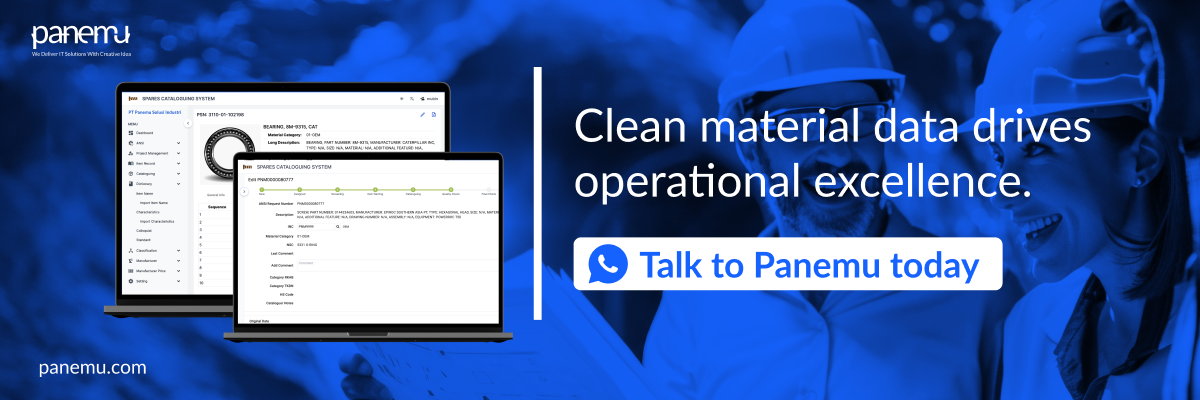
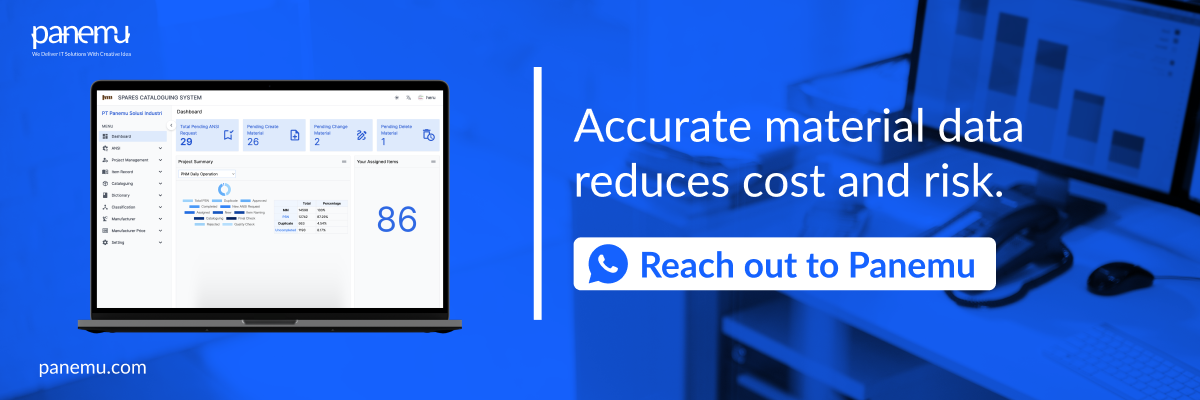
For organisations seeking to establish a strong data foundation, a dedicated Spares Cataloguing System provides a practical and scalable solution.
Rather than relying on spreadsheets or manual maintenance processes, a Spares Cataloguing System creates a structured environment for governing Material Master Data throughout its lifecycle.
Master Data Management. Centralised governance ensures material records follow consistent standards across multiple systems, locations, and business units. This improves data quality while reducing duplication and inconsistency.
Data Normalisation Engine. Material descriptions, technical specifications, and naming conventions are standardised automatically according to predefined rules. This improves searchability and reporting consistency.
Duplicate Detection. Advanced matching algorithms identify duplicate and near-duplicate records before they create inventory visibility and procurement challenges.
Intelligent Search Engine. Users can locate materials using technical attributes, manufacturer references, specifications, and alternative search terms. This significantly improves user experience and data accessibility.
Classification Management. Support for NSC, UNSPSC, and other classification frameworks helps organisations establish consistent data structures that improve analytics and governance.
Integration Capability. Modern Spares Cataloguing Systems integrate with ERP, EAM, CMMS, SAP, and inventory management platforms, ensuring data quality improvements flow throughout the technology ecosystem.
For Digital Transformation Leaders, the value extends beyond data quality alone. A Spares Cataloguing System creates the operational foundation necessary for advanced technologies to function effectively.
Building a Migration-Ready Data Environment
ERP and EAM migration projects represent a unique opportunity to improve data quality before technical debt is transferred into a new platform.
Unfortunately, many organisations approach migration with a "lift-and-shift" mindset. Existing data is moved without addressing underlying quality issues.
The result is predictable.
Old problems appear inside new systems.
A migration-ready data environment requires a more disciplined approach.
Assessment Phase. Existing material records are analysed to identify duplicates, inconsistencies, classification gaps, and missing attributes. This creates visibility into the true condition of the data landscape.
Standardisation Phase. Naming conventions, technical descriptions, classification structures, and attribute models are aligned to organisational standards.
Governance Phase. Policies and workflows are established to maintain data quality after migration.
Integration Phase. Clean and governed data is transferred into ERP, EAM, CMMS, and reporting environments, ensuring downstream systems receive accurate information.
A Spares Cataloguing System supports each of these phases, reducing migration risk and accelerating business value realisation.
Most importantly, it prevents organisations from repeating the same data quality challenges after implementation.
The ROI of Fixing Data Before Chasing Innovation
Digital transformation budgets are often allocated towards visible innovation initiatives. Yet some of the highest returns come from investments that improve foundational data quality.
Clean Material Master Data reduces procurement inefficiencies, improves inventory visibility, enhances reporting accuracy, and accelerates system adoption.
It also increases the effectiveness of every future technology investment.
AI initiatives become more reliable.
Digital twin projects become more accurate.
ERP reporting becomes more meaningful.
Maintenance planning becomes more efficient.
Supply chain visibility improves.
The cumulative effect is significant because one improvement supports multiple business functions simultaneously.
For Digital Transformation Leaders, this creates a compelling investment sequence. Rather than pursuing increasingly sophisticated technologies on top of inconsistent data, organisations achieve better outcomes by strengthening the foundation first.
Industry 4.0 delivers the greatest value when Data 1.0 is already under control.

Conclusion
The future of industrial operations will undoubtedly involve AI, digital twins, Industrial IoT, predictive analytics, and increasingly connected enterprise systems.
However, none of these technologies can overcome poor master data.
Material Master Data remains the foundation supporting ERP systems, EAM platforms, CMMS environments, inventory management processes, procurement workflows, and digital transformation initiatives.
When that foundation is weak, technology investments struggle to achieve their full potential.
When it is strong, every system performs better.
For Digital Transformation Leaders, the lesson is clear: before pursuing the next wave of innovation, ensure the underlying data is ready to support it.
Because Industry 4.0 success still begins with Data 1.0.
Before the Next Transformation Project, Ask This Question
Before approving another ERP migration, AI initiative, digital twin programme, or analytics platform, there is a simpler question worth answering first.
Can your organisation trust its Material Master Data?
When material records are inconsistent, duplicate items remain hidden, and searchability is poor, procurement decisions slow down, inventory visibility becomes unreliable, and valuable business insights remain out of reach.
The challenge is often not the ERP platform.
It is not the EAM system.
It is not the reporting tool.
More often, the real issue lies in the quality, governance, standardisation, and discoverability of the Material Master Data supporting those technologies.
That is why Panemu helps organisations understand the actual condition of their Material Master Data through complimentary consultation and data assessment services. We identify hidden quality issues, evaluate governance maturity, and provide practical recommendations that strengthen the data foundation behind ERP, EAM, CMMS, procurement, maintenance, and supply chain operations.
Because every successful digital transformation starts with reliable data.
And some of the most valuable technology investments are the ones that ensure existing systems can finally deliver their full potential.
Curious whether your Material Master Data is enabling transformation—or quietly limiting it?
Schedule a complimentary consultation or submit a sample of your Material Master Data for a free assessment and analysis.
Learn more at: https://panemu.com/scs-key-feature
You can also explore Panemu’s broader Material Master Data governance and Spares Cataloguing System initiatives to understand how clean, standardised, and governed data supports ERP migration success and long-term digital transformation outcomes.