Every physical object that sustains industrial operations—from the smallest screw to the most complex turbine component—carries a story. Yet, without a clear structure to identify and retrieve that story, chaos emerges. Numbers, at first glance, may appear mundane, but in the realm of Maintenance, Repair, and Operations (MRO), the Item Numbering System is the silent architecture that ensures clarity, precision, and operational reliability.
The Essence of an Item Numbering System
An Item Numbering System is a structured method for assigning a unique numerical or alphanumerical identity to each item within a catalog, warehouse, or technical inventory. Far from being arbitrary, this system serves as a universal reference code—an anchor that connects physical goods with digital records, maintenance procedures, procurement cycles, and logistical flows.
- Uniqueness of Identification
Every item must carry an exclusive identifier to eliminate confusion. Without such uniqueness, two similar bolts could be mistaken for one another, leading to procurement errors or maintenance delays. A well-crafted numbering system establishes a singular identity that leaves no room for ambiguity. - Systematic Organization
The numbering sequence is not just a string of digits—it reflects hierarchy, classification, and grouping. Items are often arranged based on families, categories, or functional applications, creating a logical order that simplifies navigation through extensive catalogs. - Traceability Across Functions
Item numbers act as the thread connecting purchasing, engineering, warehousing, and maintenance. By providing a consistent reference, organizations can track the lifecycle of each material from acquisition to disposal.
Structural Principles Behind Numbering Systems
The strength of an Item Numbering System lies in its design. Several principles are universally acknowledged by MRO practitioners:
- Simplicity with Scalability
Numbers must be easy to understand yet flexible enough to accommodate future expansion. Overly complex formats might overwhelm users, while simplistic structures can collapse under growth. - Standardization Across the Enterprise
Uniform rules prevent fragmentation. When every department invents its own numbering, the organization ends up with redundant stock, misclassified items, and broken communication. A standardized framework maintains harmony across all business units. - Consistency of Format
Length, character type, and sequencing must follow a fixed pattern. Consistency builds trust in the data and reduces errors during manual entry or automated integration. - Meaningful vs. Non-Meaningful Codes
Some systems embed meaning into the number (e.g., category or size), while others prefer purely sequential codes. The choice depends on organizational philosophy: meaningful codes enhance human readability, while non-meaningful codes maximize neutrality and data purity.
Functional Use Cases in Industry
How does an Item Numbering System translate into practice? Below are functional use cases that illustrate its role in daily operations:
- Maintenance Planning
When a technician requests a replacement part, the item number ensures they receive the exact component required, avoiding costly downtime. - Procurement Cycles
Buyers issue purchase orders using item numbers, ensuring suppliers deliver the precise item. This avoids mismatched deliveries and reduces return costs. - Inventory Management
Stock levels are monitored against item numbers. This enables real-time visibility and automated reordering without confusion over item descriptions. - Engineering Documentation
Technical drawings reference item numbers, making it easier to align physical materials with design specifications. - Cross-Plant Integration
In global corporations, multiple plants reference the same item number for identical components. This enhances leverage in procurement and ensures standardization across geographies.
Key Components of a Strong Numbering System
A robust Item Numbering System is not built overnight—it is engineered with specific building blocks:
- Classification Schema
A framework that determines how items are grouped (e.g., mechanical, electrical, consumables). This schema shapes the numbering sequence. - Coding Format
Rules for structuring numbers—such as fixed lengths, use of dashes, or specific digit positions allocated to categories. - Governance and Ownership
A central authority must govern number creation and modification. Without governance, duplication and inconsistencies spread rapidly. - Integration with IT Systems
ERP, CMMS, and inventory management platforms must align with the numbering structure to achieve full digital synchronization. - Data Enrichment Rules
Beyond the number itself, associated attributes (e.g., dimensions, materials, supplier details) must follow standardized entry formats.
Challenges Without a Numbering System
Organizations that lack a disciplined numbering system face operational turbulence:
- Duplicate stock items inflate inventory value unnecessarily.
- Technicians waste time searching for the right components.
- Procurement negotiates poorly due to fragmented supplier records.
- Audit trails break down, weakening compliance and traceability.
These challenges reveal how numbering is not simply about classification—it is about ensuring operational integrity across the value chain.
Functional Patterns of Numbering Structures
There is no one-size-fits-all approach. Different industries adopt structures that suit their operational dynamics:
- Sequential Numeric Systems
Items are assigned numbers in ascending order, prioritizing simplicity and neutrality. - Category-Based Systems
Codes embed categories, such as a prefix for electrical components or suffix for consumables. - Hybrid Systems
A balance of sequential numbering and embedded meaning, offering both machine efficiency and human readability. - Intelligent Numbering with Metadata
Some advanced systems tie item numbers to metadata layers in ERP, enabling complex queries without overloading the number itself.
Best Practices for Designing and Implementing
Crafting a successful Item Numbering System requires deliberate effort:
- Define clear objectives: what should the numbering system achieve?
- Engage cross-functional stakeholders: maintenance, procurement, engineering, and IT.
- Document rules in a governance policy.
- Avoid excessive encoding of meaning into numbers.
- Train employees to ensure adoption and consistency.
- Audit periodically to eliminate redundancies.

The Interplay Between Numbering and Cataloguing
Numbering alone is insufficient without proper cataloguing. A catalog transforms item numbers into actionable intelligence by enriching them with descriptive attributes, technical specifications, and cross-references. In MRO practice, cataloguing and numbering function as two halves of the same system: numbering provides identity, cataloguing provides meaning.
Closing Perspective
The Item Numbering System is more than an administrative tool—it is the invisible backbone that sustains industrial efficiency. Each number represents not only an item but also the assurance that processes remain accurate, synchronized, and scalable. Without such a system, industries descend into confusion; with it, they achieve precision and operational excellence.
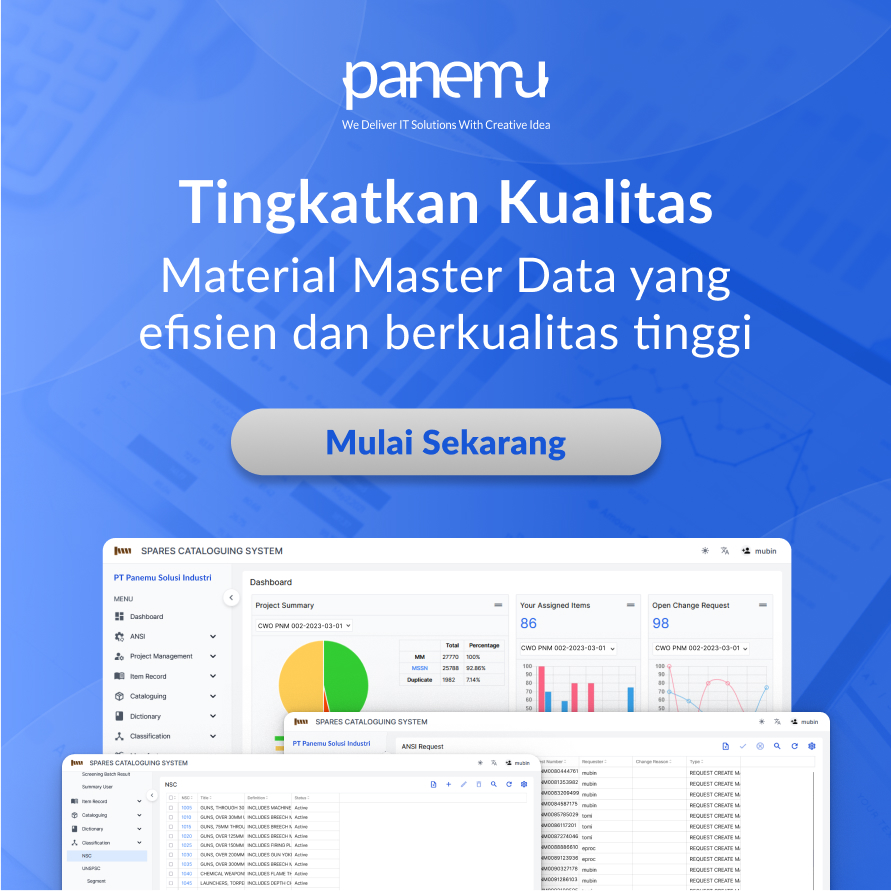
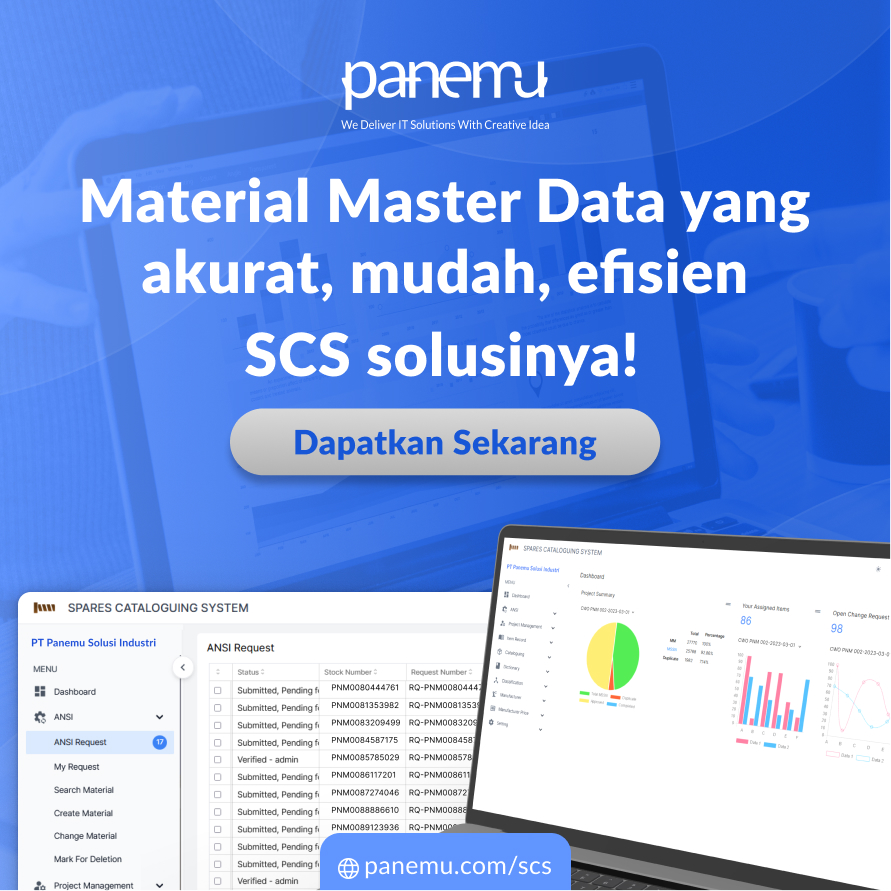
For organizations seeking to strengthen their cataloguing and item numbering practices, professional services offer the expertise needed to implement standardized frameworks and sustainable governance. Solutions such as Panemu Cataloguing Service provide tailored approaches to ensure material data is accurate, consistent, and industry-compliant. Moreover, structured solutions like Panemu SCS Key Feature empower enterprises with advanced tools for standardization, ensuring numbering systems integrate seamlessly with broader business processes. Engaging with these services is not merely about adopting a tool—it is about transforming how industries perceive, manage, and optimize their material universe.