Your procurement team just paid IDR 4.2 million for a bearing at Site A. Last week, Site B bought the exact same bearing — same manufacturer, same part number, same vendor — for IDR 3.1 million. Neither buyer knew the other transaction existed, because in your ERP, those two bearings are recorded as completely different materials. This is not a hypothetical scenario. It is happening in your operation right now, and it is costing you between 20% and 40% on items where you should be holding all the leverage.
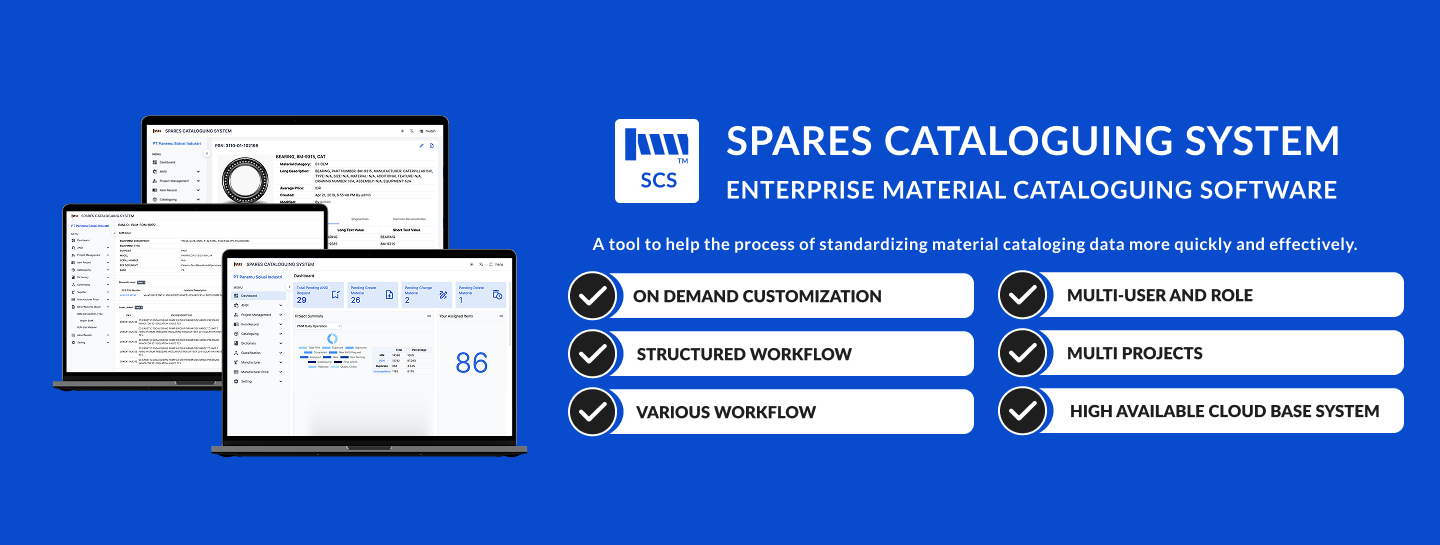
For Procurement Directors managing multi-site operations across mining, oil and gas, power generation, or heavy manufacturing, this is the silent margin killer that no spend analytics dashboard will ever surface. You cannot consolidate what your system tells you is fragmented. You cannot negotiate volume discounts on items the system insists are unique. And you cannot hold vendors accountable to consistent pricing when your own data hands them the freedom to charge whatever each site will tolerate. The fix is not another procurement policy or a stricter approval workflow. The fix is Panemu's Cataloguing Service powered by SCS® — the only purpose-built platform that converts your fragmented material data into a single, governed source of truth that restores your pricing leverage. Read on, then book a Pricing Leverage Audit today. Every week you delay is another week of premium payments you will never recover.
The Hidden Tax of Naming Chaos in Multi-Site Procurement
Naming chaos is what happens when the same physical item enters your master data through different doors. Site A's storeman creates "BEARING SKF 6205-2RS1." Site B's maintenance planner creates "BRG, BALL, 25X52X15, SKF." Site C's contractor uploads "6205 2RS BEARING SKF DEEP GROOVE." Three records. Three material codes. Three independent purchasing histories. One identical part.
Multiply this pattern across 50,000 to 200,000 SKUs in a typical asset-intensive operation, and the consequences compound fast. Industry research consistently shows that 15% to 40% of MRO master data records in unmanaged catalogues are functional duplicates. In our own engagements with mining and power generation clients, we routinely identify duplicate clusters representing 20% to 35% of total active SKUs. Every duplicate is a leak point — a place where your enterprise pricing power quietly evaporates.
The most damaging leak is the one Procurement Directors rarely see clearly: vendors know your data is fragmented, and they price accordingly. A regional sales rep visiting Site B does not need to undercut the price quoted to Site A, because Site A's quote does not exist in any database he or his customer can cross-reference. Each site negotiates from a position of artificial isolation. The vendor consolidates. You do not.
Why Your ERP Cannot Solve This (And Never Will)
There is a comfortable assumption inside many procurement organisations that SAP, Oracle, Maximo, IFS, or Pronto will eventually surface these duplicates through reporting. They will not. ERP and EAM systems are transactional engines built to process the master data they are given. They do not interrogate it, normalise it, or reconcile it across sites. If two records describe the same bearing in different words, the ERP treats them as two different bearings — full stop.
This is the structural reason naming chaos persists year after year despite well-intentioned data governance committees. The cleansing capability simply does not exist inside the system of record. It has to be performed upstream, by a methodology and a team purpose-built for MRO material master data — which is precisely what Panemu's Cataloguing Service delivers. Generic AI tools and offshore data entry vendors fail at this work for the same reason: MRO cataloguing requires deep domain understanding of how parts are specified, how manufacturers number them, how synonyms proliferate across sites, and how technical attributes drive functional equivalence. Get one attribute wrong and you create a false match that breaks the buyer's trust forever.
Panemu's Professional Cataloguer Team performs quality control on every record before it enters your governed catalogue. AI is on our development roadmap as an accelerant, but the human cataloguing expertise is what makes the output reliable enough to base million-dollar consolidation decisions on. This is the difference between data that looks clean and data that procurement can actually act on.
How Vendor Cross-Reference Exposes the Pricing Premium
Once your material master is cleansed and each canonical part has a single, governed record, something powerful becomes possible: price history consolidation across every site that has ever purchased that part. This is the analytical capability that transforms procurement from reactive transaction processing into strategic negotiation.
Here is what the cleansing process surfaces in a typical engagement. We identify a canonical bearing — let us call it the SKF 6205-2RS1 — that previously existed under 14 different material codes across 6 sites. We pull the consolidated 24-month purchase history. We see that Site 3 paid IDR 2.9 million per unit on average. Site 7 paid IDR 4.1 million. Same part. Same manufacturer. Same vendor in 80% of the transactions. The price spread is 41%, and it has been invisible to your central procurement team for as long as the duplicates have existed.
Now extend this pattern across the top 100 spend items in your MRO catalogue. The mathematics become uncomfortable very quickly. If your annual MRO spend sits at IDR 200 billion and even 30% of it flows through duplicated material codes, a conservative 15% pricing premium on that fragment alone equals IDR 9 billion in annual leakage that consolidation could recover. We have presented numbers in this range to procurement leaders who initially refused to believe them — until the cleansed data made the conclusion impossible to dispute.
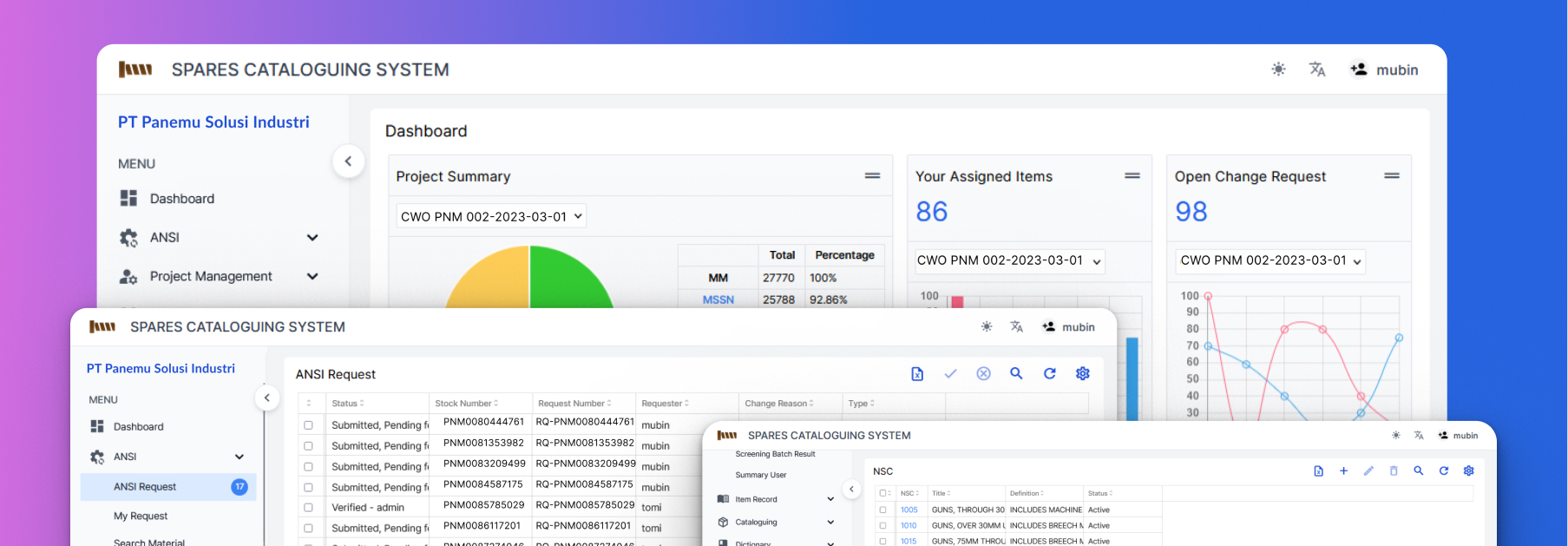
The Panemu Cataloguing Service builds this consolidated price history as a standard deliverable. You see, for every canonical material, the full vendor cross-reference: who quoted, who supplied, what each site paid, when, and against which purchase order. This is the foundation procurement needs to walk into the next negotiation cycle holding actual leverage instead of anecdotal hunches.
From Tribal Knowledge to Price Awareness in Every PO
Most multi-site procurement organisations run on tribal knowledge. The senior buyer at Site A "knows" what bearings should cost because she has been buying them for twelve years. The new buyer at Site D approves whatever the system suggests because he has nothing better to benchmark against. When the senior buyer retires or rotates, her pricing intuition leaves with her. The organisation loses years of accumulated leverage in a single off-boarding.
Cleansed material master data converts that tribal knowledge into institutional knowledge that lives inside the system, not inside individual heads. Every requisition, every purchase order, every vendor quote can be benchmarked against the consolidated price history for that exact canonical part. The buyer at Site D sees, in real time, that the same bearing was purchased at Site A three months ago for 22% less from the same vendor. That single data point reframes the entire negotiation.
This is what we mean by price awareness in every PO. It is not a software feature. It is the operational outcome of having clean, governed, deduplicated material master data feeding your transactional systems. Without the cleansing layer, the awareness is impossible. With it, awareness becomes the default state of every procurement decision.
Our flagship partner, PT Merdeka Copper Gold Tbk, has been operating on Panemu-cleansed material master data since April 2019. Across eight contract renewals and 27,771 governed items, their procurement organisation has institutionalised the kind of price awareness that simply cannot be retrofitted onto fragmented data. The same governance framework is operational at PT Jawa Satu Power in Indonesian power generation and Arrow Energy in Australian oil and gas. These are not pilot programs. They are production deployments running on enterprise-scale catalogues, every day.
The Consolidation Play: Two Paths to Immediate Recovery
Once the cleansing surfaces the price spreads, you have two clear paths to monetise the leverage. Both should be executed in parallel.
The first path is internal consolidation to best price. For every canonical material where multiple sites have transacted with the same vendor at different prices, procurement can issue a corporate directive: all future purchases of this part route to the lowest historical price already on file, with the supplying vendor matching that price across all sites. This is not a negotiation. It is a price-match enforcement, and vendors comply because the alternative is losing the consolidated volume to a competitor. Recovery is immediate, often within the first quarterly cycle.
The second path is leveraged renegotiation. Armed with consolidated 24-month spend visibility per canonical part, procurement walks into framework agreement renewals with concrete volume commitments and concrete price benchmarks. Vendors who previously enjoyed site-by-site pricing freedom now face a single negotiating counterparty with full data symmetry. The 20% to 40% premium that used to flow to the vendor flows back to your operating margin. We have observed first-cycle savings of 8% to 18% on consolidated categories, with compounding effects in subsequent cycles as the catalogue governance matures.
Neither path is achievable on fragmented data. Both paths become routine procurement practice once the Cataloguing Service has been deployed. This is why we frame the engagement not as a data project but as a pricing leverage recovery program — because that is what it functionally is.
The Cost of Waiting Another Quarter
Every quarter you operate on uncleansed material master data, the leakage continues. If your organisation spends IDR 200 billion annually on MRO and even half of the conservative 15% premium estimate is real for your operation, that is roughly IDR 3.75 billion per quarter walking out the door to vendors who are doing nothing more sophisticated than reading your fragmented data better than you are.
This cost compounds in three ways. First, the direct premium on every duplicate transaction. Second, the inventory carrying cost of holding the same part under multiple codes across multiple warehouses, often with safety stock duplicated unnecessarily. Third, the opportunity cost of procurement talent spending hours reconciling spend reports that should have been consolidated automatically — hours that should be spent on strategic sourcing.
Three quarters of inaction is roughly IDR 11 billion in compounded leakage on the assumptions above, and those assumptions are conservative. Aggressive but realistic estimates push the number higher. Our SCS® platform and the Cataloguing Service that operates on it are engineered specifically to stop this leakage and convert it into recovered margin. There is no comparable purpose-built solution in the Indonesian and Australian markets we serve, and ISO 8000 adoption frameworks ensure the cleansed data meets the international standard for material master quality.
Summary: What Cleansed Data Actually Buys You
The headline benefit of Panemu's Cataloguing Service is straightforward. You stop paying premiums on items that are functionally identical across your sites. The mechanism is equally clear: duplicate screening collapses the fragmented records into governed canonical materials, vendor cross-reference consolidates the price history across all sites, and your procurement organisation gains the data foundation to consolidate spend, enforce price-match, and renegotiate from strength.
The strategic outcome is what every Procurement Director ultimately answers for: every purchase order executed with full price awareness, every framework agreement negotiated with full data symmetry, and every rupiah of MRO spend optimised against a single source of truth. Tribal knowledge becomes institutional knowledge. Vendor leverage stops accruing to the vendor. Margin that was leaking quietly for years starts flowing back where it belongs.
The companies already operating this way — Merdeka Copper Gold, Jawa Satu Power, Arrow Energy — are not waiting for the next budget cycle to act. They are compounding the savings quarter after quarter, while their competitors continue to fund vendor margins through naming chaos.
Book Your Pricing Leverage Audit Today
Stop reading dashboards that cannot see the duplicates. Stop accepting price spreads that should never exist. Stop letting vendors price your fragmentation back to you as a premium.
Panemu's Cataloguing Service starts with a focused Pricing Leverage Audit on your top 100 spend items — the fastest path to identifying exactly how much premium your operation is paying right now and exactly how much consolidation will recover in the first quarter. The audit is direct, it is concrete, and it puts a defensible recovery number in front of your finance committee within weeks, not quarters.
Learn more about how the Cataloguing Service works at https://panemu.com/cataloguing-service, then contact our team to scope your audit. Reach us at +62 812-1590-2011 or [email protected]. The first conversation takes 30 minutes. The leverage you recover lasts as long as your operation runs.
Every quarter you delay, the premium keeps compounding. Make this the quarter you stop paying it.